UV Optics: Choosing Materials and Coatings for Ultraviolet Systems
Ultraviolet optics are the most demanding area of optical design. Photon energy is high, most materials absorb strongly, and tiny amounts of contamination or coating imperfection that would be invisible in the visible can destroy performance at 266 nm or 193 nm. Getting UV right starts with choosing the right material.
Fused silica is the default substrate for UV transmission optics. Synthetic fused silica, especially UV-grade material with low hydroxyl content, transmits well down to about 190 nm. Standard borosilicate glass, by contrast, begins absorbing below roughly 350 nm and is unsuitable for deep UV work.
For the deepest UV, calcium fluoride and magnesium fluoride transmit further than fused silica, down to around 130–150 nm, but they are soft, expensive and hygroscopic in some forms. Sapphire is another option, transmitting from the UV into the infrared with excellent hardness — see our sapphire windows — though its UV cutoff is around 150–200 nm depending on grade.
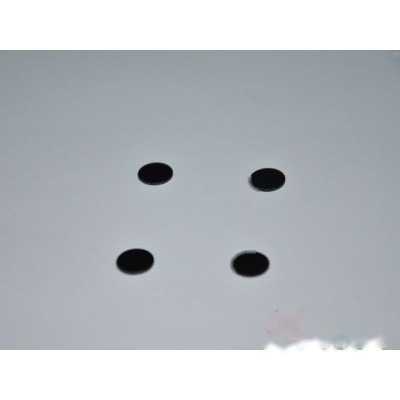
Coloured glass has a role in UV too. UV-transmitting grades such as UV glass ZWB1/ZWB3 are used where a rugged, angle-insensitive filter is needed and extreme steepness is not critical.
Coatings are where UV systems most often fail. Thin-film materials that are transparent in the visible can absorb strongly in the UV, so UV coatings use specialist low-absorption materials such as magnesium fluoride and certain fluorides. An AR coating designed for 1064 nm offers no benefit at 266 nm.
Laser damage threshold is critical in UV. Because photon energy is higher and materials absorb more, UV optics have significantly lower damage thresholds than their infrared counterparts. Always use a UV-rated coating and verify the LIDT at your exact wavelength, pulse width and repetition rate.
Surface quality and cleanliness matter enormously. At short wavelengths, a surface defect or a residue layer is large relative to the wavelength and scatters or absorbs light. Specify a high laser-grade surface finish and handle UV optics in clean conditions with powder-free gloves.
Contamination is a particular enemy. Organic residues, fingerprints and even some cleaning solvents can leave absorbing films that burn under UV illumination. Use high-purity solvents, lint-free wipes and follow a strict cleaning protocol; our guide on cleaning optical components covers the method.
Fluorescence and spectroscopy are common UV applications. A UV mirror or filter must be paired with a detector that responds in the UV, and the optical path should be purged or sealed if ozone or air absorption is a concern below about 200 nm.
Tell us your operating wavelength, power, pulse conditions and aperture. Our team can recommend a fused-silica substrate with an appropriate UV coating, or quote a custom UV optic with measured transmission and reflectance data.